In recent years, pulmonary nodules detected during routine health examinations have become increasingly common, representing a growing public health concern. Yet, beyond regular follow-up and observation, current clinical management mainly relies on CT surveillance, with limited non-invasive intervention options available.
Previously, a Phase IV clinical study analysis by Asclepius Meditec found that hydrogen-oxygen inhalation may improve pulmonary nodule outcomes, with a statistically significant reduction in nodule volume observed.). Now, another latest clinical study has been officially published, adding new evidence-based medical data to this field.
According to the 2024 report from Meinian Onehealth, among more than 19 million health examination participants, pulmonary nodules were detected in 63.6% of individuals, including 13.7% with ground-glass nodules. Based on this estimation, hundreds of millions of people in China may have pulmonary nodules.
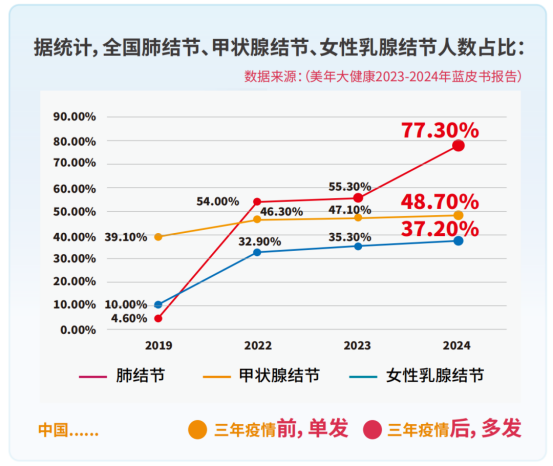
Pulmonary nodules can be an early imaging manifestation associated with lung cancer risk. However, biopsy can be challenging, and unnecessary surgical intervention remains a concern. Currently, CT follow-up is the main approach. Exploring safe and effective non-surgical interventions is of great significance for delaying nodule progression and reducing the potential risk of malignancy.
To this end, researchers from Dongying People's Hospital, Qilu Hospital of Shandong University Dezhou Hospital, and other institutions jointly conducted a randomized controlled trial (registered in the Chinese Clinical Trial Registry under registration number ChiCTR2300076152), which was recently published in an international academic journal [1].
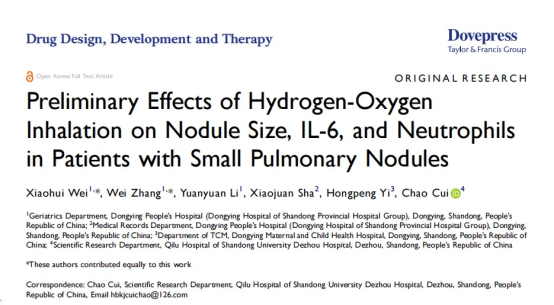
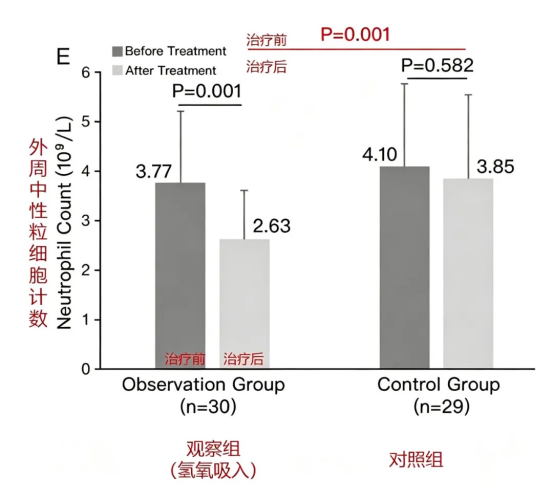
This study enrolled 59 patients with small pulmonary nodules (SPN) confirmed by chest CT, who were randomly assigned to a hydrogen-oxygen inhalation group (n=30) and a control group (n=29). The hydrogen-oxygen inhalation group inhaled hydrogen-oxygen mixed gas via the Asclepius Meditec AMS-H-03 hydrogen-oxygen generator (3000 mL/min), while the control group inhaled only air. Both groups received 4 hours of inhalation per day for 14 consecutive days, and all indicators were re-examined after 3 months.
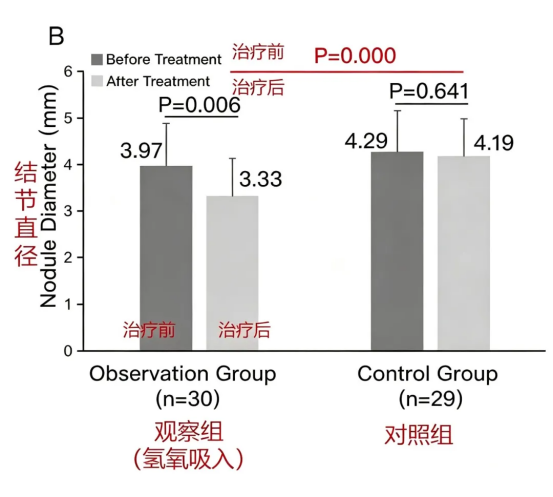
Result 1: Nodule diameter was significantly reduced in the hydrogen-oxygen inhalation group. In the observation group, the mean nodule diameter decreased by 0.64 mm (P<0.01), whereas the control group decreased by only 0.10 mm. The between-group difference was highly statistically significant.
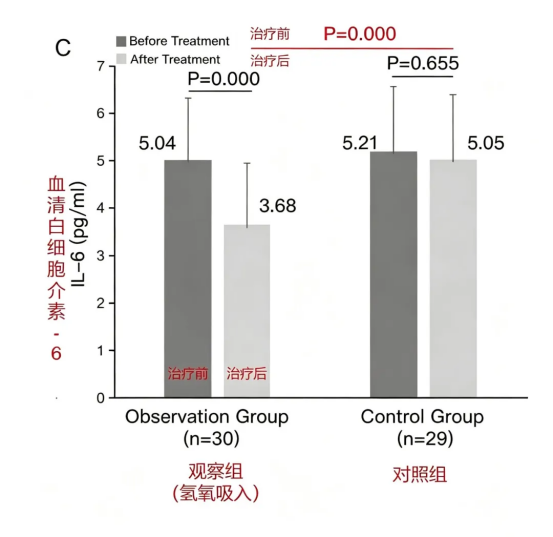
Result 2: Inflammatory cytokines significantly decreased. In the hydrogen-oxygen inhalation group, serum IL-6 levels decreased by an average of 1.36 pg/mL (P<0.01) and peripheral blood neutrophil counts decreased by an average of 1.14×10⁹/L (P<0.01). The control group showed no significant changes. (IL-6 and neutrophils are important markers associated with inflammatory responses. IL-6 and neutrophils are important markers associated with inflammatory responses. Their reduction suggests an improvement in the inflammatory environment.
In addition, the trial also compared inflammatory cytokine levels in the smoking subgroup before and after treatment, and found that IL-6 and neutrophil counts also decreased significantly after hydrogen-oxygen inhalation (both P<0.01).
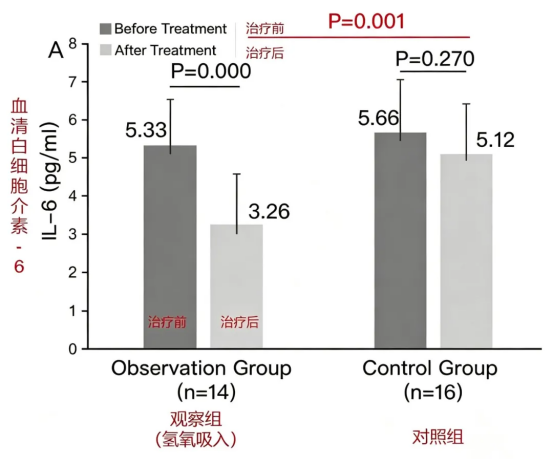
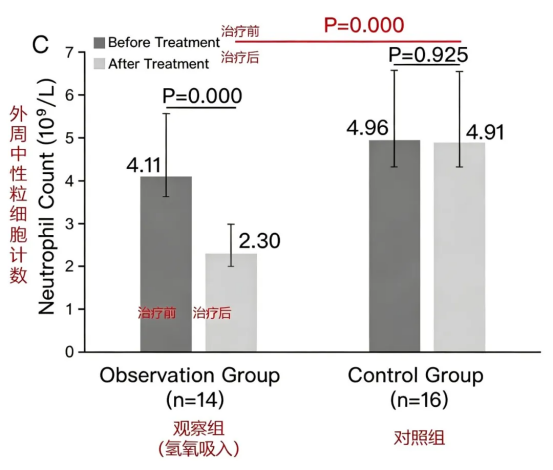
The study concluded that hydrogen-oxygen inhalation can reduce the diameter of small pulmonary nodules (SPN) and lower peripheral blood IL-6 and neutrophil levels, suggesting potential anti-inflammatory activity. Hydrogen-oxygen inhalation may serve as a potentially safe and non-invasive adjunctive approach for small pulmonary nodules.
For the hundreds of millions of people in China affected by pulmonary nodules, this is undoubtedly encouraging news.
In fact, this is not the first exploration of hydrogen-oxygen inhalation in the field of pulmonary nodules. From cell studies and animal experiments to single-center and multi-center clinical trials, the evidence base for hydrogen-oxygen medicine in respiratory diseases continues to grow.
A Phase IV post-market clinical study led by the National Clinical Research Center for Respiratory Diseases, using Asclepius Meditec products, demonstrated that:
Final words
When pulmonary nodules have become a public health issue affecting hundreds of millions of people, finding a safe, non-invasive, evidence-based non-surgical intervention is of immense significance. Further high-quality clinical studies are expected to provide more comprehensive evidence in this emerging field.
Reference:
[1] Wei X, Zhang W, Li Y, Sha X, Yi H, Cui C. Preliminary Effects of Hydrogen-Oxygen Inhalation on Nodule Size, IL-6, and Neutrophils in Patients with Small Pulmonary Nodules. Drug Des Devel Ther. 2026 Jul 8;20:605134. doi: 10.2147/DDDT.S605134. PMID: 42453934; PMCID: PMC13366078.

